
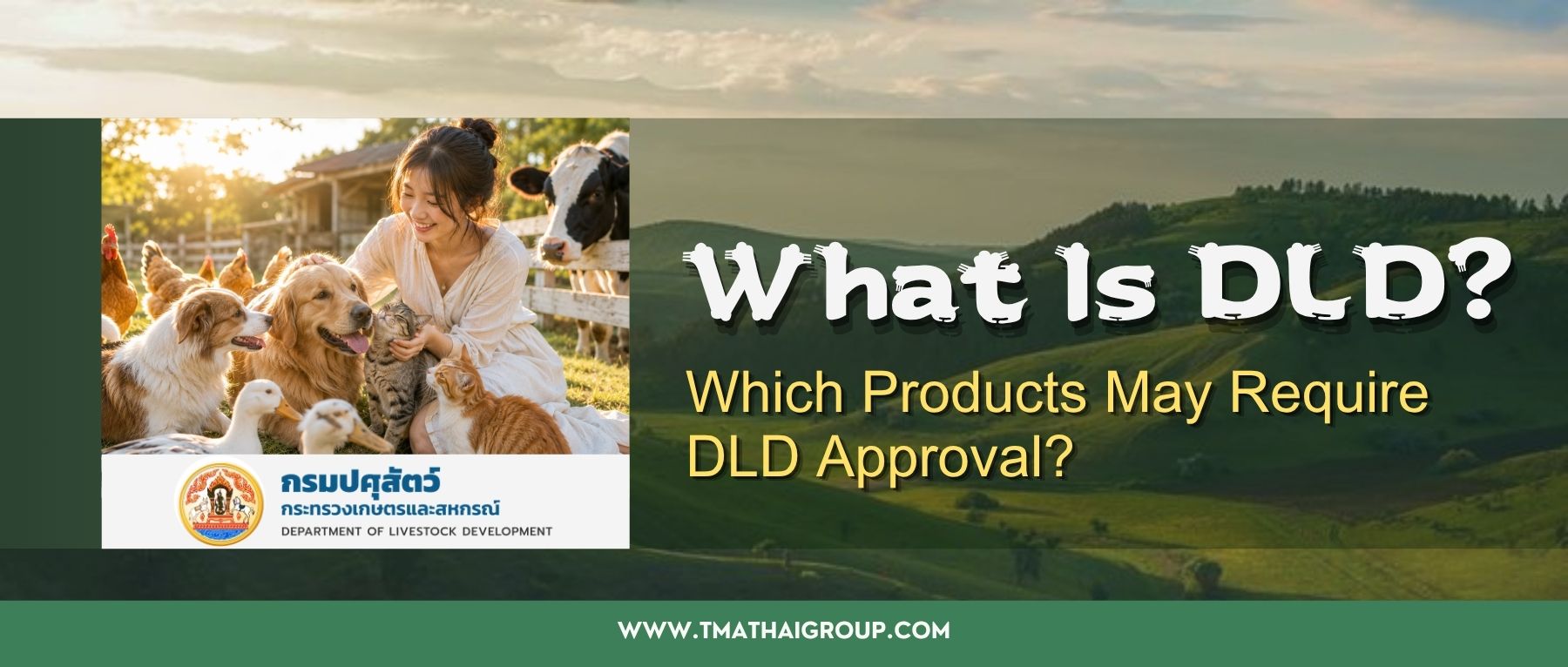
What Is DLD?
About TMA Group
TMA Group is a professional company focusing on local recruitment and corporate consulting in Thailand, dedicated to providing one-stop services including recruitment, financial management, tax disposal, legal consulting, personnel management, etc. for enterprises and individuals. If you need more advice on investment in Thailand, please feel free to contact us.
—— TMA GROUP ——
DLD (Thailand Department of Livestock Development)
Many companies exporting products to Thailand are familiar with certification requirements such as FDA, TISI, and TC. However, another important regulatory authority is often overlooked — DLD (Department of Livestock Development).
In fact, if a product involves animals, animal-derived ingredients, pet food, or the livestock industry, it may fall under DLD regulation. Failure to understand the relevant requirements in advance could result in customs detention, shipment rejection, or even administrative penalties.
DLD (Department of Livestock Development) is a government agency under Thailand’s Ministry of Agriculture and Cooperatives.
Its primary responsibilities include animal health management, disease prevention and control, livestock product regulation, and the approval of imports and exports involving animals and animal-related products.
DLD not only regulates live animals but also oversees animal products, pet food, animal feed, and related industries. Therefore, it is an important regulatory authority that importers and exporters must understand.
The core functions of DLD include:
• Animal disease prevention and control
• Animal import and export management
• Approval of animal product imports and exports
• Pet food regulation
• Feed and feed additive regulation
• Certification of livestock farms and manufacturing facilities
• Animal quarantine and issuance of health certificates
For importers, the most common interactions with DLD involve product approval and import permit applications.
1. Pet Food
Including:
• Cat food
• Dog food
• Pet treats
• Pet nutritional supplements
• Canned pet food
• Freeze-dried pet food
In recent years, exports of pet food from China to Thailand have grown rapidly, and most of these products require DLD approval before they can be legally imported.
2. Animal Feed and Feed Additives
Including:
• Aquaculture feed
• Poultry feed
• Pig feed
• Cattle and sheep feed
• Premixes
• Feed additives
Thailand maintains strict controls on imported animal feed, and certain products may require registration, notification, or import permits.
3. Animal-Derived Products
Including:
• Meat products
• Dairy ingredients
• Bone meal
• Blood meal
• Animal protein
• Collagen raw materials
• Pet food ingredients
Due to animal disease concerns, these products generally require certificates of origin, health certificates, and other supporting documents required by DLD.
4. Live Animals
Including:
• Cats
• Dogs
• Horses
• Cattle and sheep
• Poultry
• Economic livestock animals
Import permits must be obtained from DLD prior to importation, and quarantine procedures must be completed in accordance with regulations.
Many companies confuse the regulatory scope of FDA and DLD.
In simple terms:
Human consumption products → FDA
Animal consumption products → DLD
Some products may involve both FDA and DLD considerations.
For example:
Pet vitamins, pet nutritional supplements, and pet health products often require a regulatory assessment before importation to determine whether DLD approval is required.
Therefore, it is advisable to conduct a product classification review before entering the Thai market.
If DLD approval is required but has not been obtained, companies may face:
• Customs detention of goods
• Inability to clear customs
• Shipment rejection or return
• Product confiscation
• Administrative penalties
• Future restrictions on import activities
For companies planning long-term operations in Thailand, completing compliance approvals in advance is far more efficient than resolving problems after the goods arrive.

Summary
As trade between China and Thailand continues to grow, an increasing number of companies involved in pet food, animal nutrition products, feed products, and animal-derived ingredients are entering the Thai market.
Understanding DLD requirements, confirming whether products fall under DLD jurisdiction, and obtaining the necessary approvals in advance can significantly reduce import risks and support smoother business operations in Thailand.
END
TMA Consulting Management has been paying attention to the updating of information through newsletters for many years, but we do not assume any responsibility for the completeness, correctness or quality of the information provided. No information contained in this article can replace the personal consultation provided by a qualified lawyer. Therefore, we do not assume any liability for damages caused by the use or non-use of any information in this article (including any kind of incomplete or incorrect information that may exist), unless it is caused intentionally or by gross negligence.
What Is DLD?

What Is NBTC Certification? Which Products Must Obtain NBTC Approval Before Entering Thailand?
Thailand Machinery Registration
Why Is It Important to Confirm TISI Before Importing Products from China to Thailand?
BOI latest update: reporting required 4 times per year

In Thailand, what should you pay attention to when working with influencers?
Personal tax filing guide | 2026 tax refund steps + key pitfalls to avoid

Is it mandatory to report related-party transactions in Thailand? This article clarifies the complia